Most reliable IPTV service USA: it starts with the servers
Every IPTV service is only as good as its servers. When you open ESPN at 8:15 PM for Monday Night Football, your request travels to a server that is also serving thousands of other viewers at the same minute. A provider that rents one cheap server will freeze for everyone at kickoff, while a provider that runs several servers with spare capacity keeps the picture moving. You cannot see the servers, but you can feel them: channels that open in two seconds, a guide that loads instantly, and a picture that never drops during the busiest hour of the week.
The honest way to check is a trial at the worst possible time. Start a free 24-hour trial on a Sunday afternoon, watch the NFL on CBS and FOX, then switch to the NBA on TNT in the evening and a movie on HBO after that. Count the freezes and the time each channel takes to open. A reliable service passes that test without drama. A weak one will show its cracks within the first hour, which is exactly why the trial exists — it costs you nothing and tells you everything.
Support is part of reliability
A service with great servers and no support is still a gamble, because every setup hits a snag sooner or later: a playlist that will not load, a Firestick that needs the right app, a channel that disappears after a lineup change. The difference between a good provider and a bad one is what happens in the ten minutes after you ask for help. Send a message on WhatsApp at 9 PM and time the answer. A reply in minutes, with a clear fix and a follow-up to confirm it worked, is the mark of a team that actually runs the service.
Watch out for providers that only answer before you pay and go quiet after the money arrives. Test support during the trial, when you owe them nothing, and ask a real question: how do I set up the EPG on TiviMate, or why does one channel stutter on my Firestick? The quality of that answer predicts the quality of support you will get for the next twelve months. Our team answers on WhatsApp 24/7, in English, and the same people who activate your trial are the ones who fix problems later — there is no handoff to a different department that never replies.
The TV guide tells the truth
An accurate EPG — the electronic program guide — is one of the clearest signs of a well-run service, because it only works when someone maintains it every day. Open the guide on a Tuesday evening and compare it with what is actually on ABC, NBC and CBS. If the guide says the news is on and a movie is playing instead, nobody is maintaining the data, and the same neglect usually shows up in dead channels and stale movie lists. A guide that matches reality means a team is watching the service every day, not just collecting payments.
Check the guide across a full day: morning news on CNN and MSNBC, afternoon games on ESPN, primetime on FOX, and a late movie on AMC. A reliable provider keeps all of it accurate, including the start times for live sports, which shift when games run long. When a guide is wrong by an hour, recordings and reminders fail too, so this small detail matters more than it looks. Our installation help page shows how to refresh the EPG in TiviMate and IPTV Smarters Pro if the guide ever looks stale on your device.
Channel lineup depth matters
Reliability is about more than uptime; it is about having the channel you want when you want it. A good USA lineup covers the big four broadcast networks — ABC, NBC, CBS and FOX — plus ESPN, ESPN2, NFL Network, NBA TV, MLB Network, TNT, TBS, AMC, HBO, Showtime, CNN and Fox News, along with local channels and regional sports networks. If a provider is missing your local ABC affiliate or your regional sports network, no amount of server speed will fix the gap, so check your own must-have channels during the trial, not just the headline count.
Count the channels you actually watch, not the total on the sales page. A list of 57,000 channels sounds impressive, but what matters is whether the 30 channels your household watches every week are present, stable and in the right quality. Open each one during the trial and watch for thirty seconds: does it open fast, is the picture sharp, is the sound in sync? That half-hour check beats any sales page. Premium here carries 57,000+ channels with the full US lineup, and the plans page shows the difference between Basic and Premium side by side.
Price and honesty go together
A reliable service charges a clear price and shows it before you pay. Premium at $19.99 for one month, $49.99 for three months, $79.99 for six months and $99.99 for twelve months is a price you can plan around, with multi-device yearly plans at $159.99, $224.99 and $269.99 for two, three and four devices. There are no hidden fees, no setup charge, and no surprise renewal at a higher price. If a provider hides its prices behind a chat message or changes the price every time you ask, that is a warning sign worth listening to.
The same honesty applies to the refund policy. A service that offers a free trial and a 7-day money-back guarantee, with 30 days on yearly plans, is putting its own money behind its claims. Read the refund policy before you buy from anyone — it takes two minutes and tells you whether the provider expects you to stay because the service is good or because leaving is hard. We publish ours in plain English for exactly that reason.
How to test any provider in one evening
You do not need a week to judge a service. One evening, from 7 PM to 11 PM, is enough if you test the right things. Start the trial at 7 PM, open ABC for the evening news, switch to ESPN for the game, check the EPG against the real schedule, and message support with one question. Note three numbers: how many seconds each channel takes to open, how many times the picture freezes, and how many minutes support takes to answer. Write them down — memory is generous after a good evening and harsh after a bad one.
- Open ABC, NBC, CBS and FOX and time how fast each channel loads.
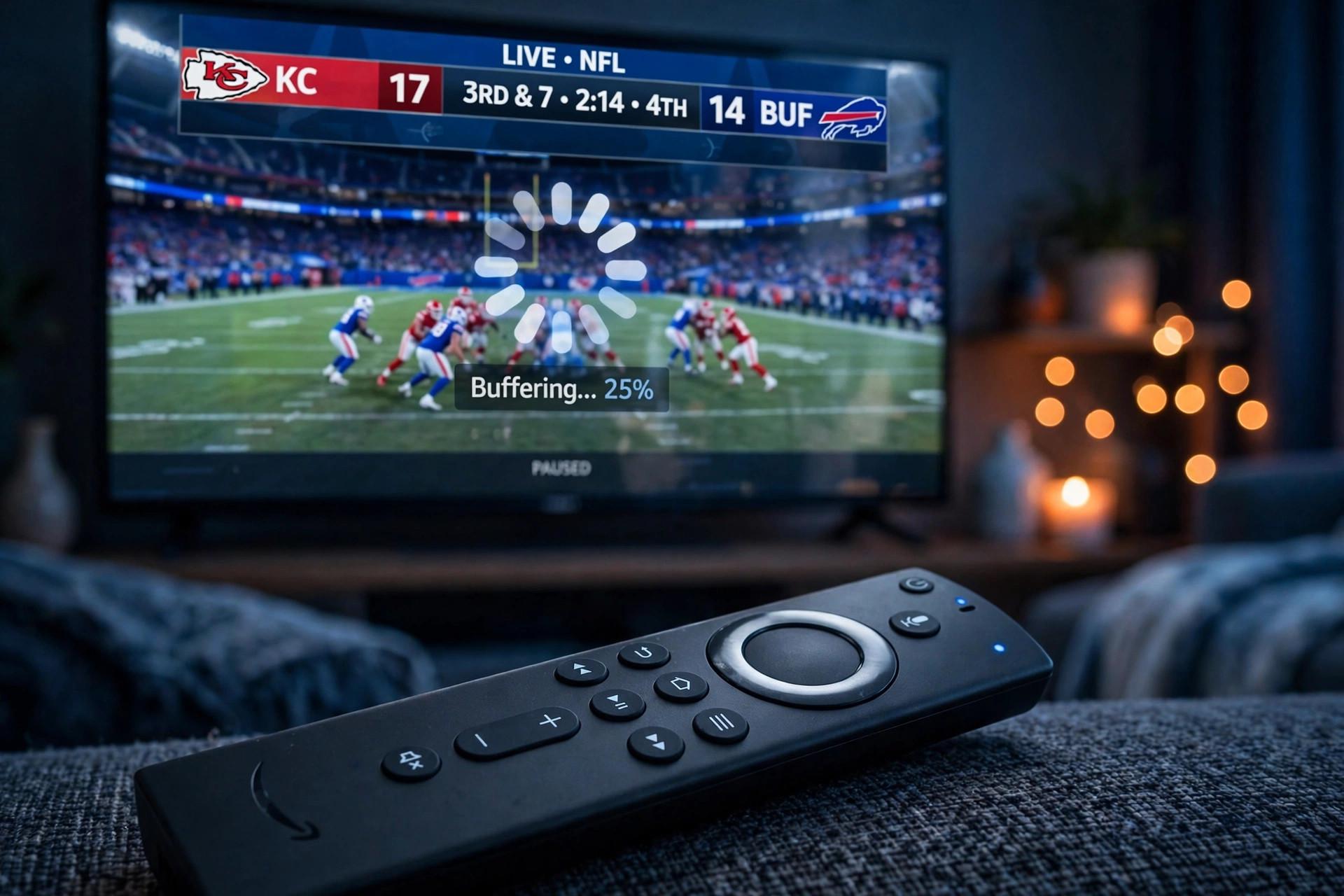
- Watch one full half of a live game on ESPN or TNT and count every freeze.
- Compare the EPG with the real schedule for three different hours.
- Message support on WhatsApp with a real question and time the reply.
- Check your five must-have channels, not just the headline channel count.
Do the same test on a second provider if you have the time, and compare the numbers side by side. The winner is usually obvious, and it is rarely the cheapest option — a $9.99 service that freezes during every big game costs more in frustration than a $19.99 service that simply works. Our Premium plan is built to pass this exact evening test, and the free trial is the way to prove it to yourself before you pay.
Red flags that mean walk away
Some signs mean a provider is not worth your money at any price. No free trial at all is the biggest one — a service that will not let you test it for 24 hours is telling you what the test would show. Prices that change depending on who asks, support that only answers on one app and never by email, and a website with no refund policy are all the same warning in different clothes. A provider that asks for payment in gift cards or cryptocurrency only is not a business; it is a exit plan.
Another red flag is a channel list that never changes. A service that still lists the same movies it had a year ago is not maintaining its library, and dead channels pile up fast when nobody removes them. During your trial, open five channels you have never watched and see whether they load — if two of them are dead, the maintenance is not happening. A reliable provider prunes dead streams weekly and adds new premieres regularly, so the library feels alive instead of frozen in time.
What a stable service feels like day to day
Reliability is something you notice most when you stop thinking about it. You sit down at 7 PM, open ABC for the news, and the channel is simply there — no spinning wheel, no error message, no restart of the app. You switch to ESPN for the game and the picture is sharp within two seconds. At halftime you open the guide, find the second half, and set a reminder without the guide crashing. Nothing about the evening feels like a technical project, and that is the point: a good IPTV service disappears into the background and lets the game be the only thing you pay attention to.
The same calm should hold on the busiest nights of the year. The Super Bowl on FOX or NBC, the NBA Finals on ABC, a UFC pay-per-view on ESPN+ — these are the nights when weak services fall apart and good ones earn their price. If your service survives the Super Bowl without a single freeze, it will survive everything else the year throws at it. Test exactly that kind of night during the trial, and judge the service by its worst evening. Our Premium plans run on priority anti-freeze servers built for those nights, and the refund policy gives you 7 days to change your mind, 30 days on yearly plans.
Reliability is not one feature, it is a chain, and the chain breaks at its weakest part. A provider can run strong servers and still fail you if its support takes a day to answer, or if its guide goes stale every Sunday. The honest way to judge the chain is to test each part on the same evening: watch a live game, open the guide, and message support with a real question, then write down what actually happened. Sports are the hardest test of all, because a Sunday slate hits the servers at the same minute across the country; our most reliable IPTV for sports explains what survives that peak, and the uptime and reliability guide shows how to measure it yourself instead of trusting a sales page. Run those checks during the free 24-hour trial before you pay for a year, and keep the notes: a provider that passes three Sundays in a row has earned the yearly plan.